


Maybe the family conversation has started, and everyone’s wondering what the right next step looks like.

A care home is one answer. But for many people, and many families, staying at home, in familiar surroundings, with a consistent person they trust, is the better one.

Live-in care from Happiest at Home means a dedicated CarePal living with you: someone matched to your personality and your needs, present when you need them, and part of a daily life that still feels like yours.
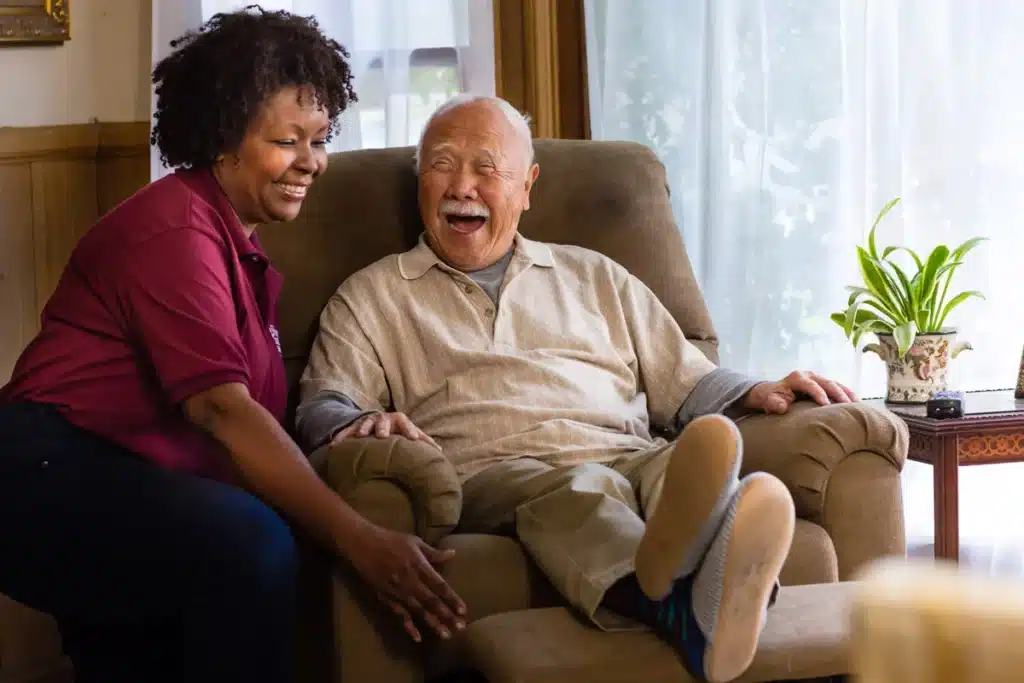

Who is live-in care for?

Live-in care is often the right choice when:

  • Someone needs support throughout the day and cannot safely be left alone for extended periods
  • A care home has been considered but staying at home remains the strong preference, for the individual, their family, or both
  • The level of need has increased beyond what visiting care can realistically cover
  • There is a progressive condition, such as dementia, Parkinson’s or MS, that requires a consistent, deeply familiar presence
  • Family carers are no longer able to provide the level of support needed without support of their own
  • Someone has been discharged from hospital and needs full-time support during recovery
  • An individual with a disability needs a stable, consistent presence to maintain their quality of life and independence at home

What your live-in CarePal provides

A live-in CarePal is present throughout the day and available overnight when needed. The support they provide is shaped entirely around the individual, but typically includes:

Personalised care
  • Personal care
    Morning and evening routines, bathing, dressing, continence support, with dignity at the centre
  • Medication management
    Prompting or administering medication as part of an agreed plan
  • Meal preparation
    Proper, nutritious meals suited to taste, health needs and routine
  • Housekeeping
    Keeping the home safe, clean and comfortable
  • Mobility support
    Moving around the home safely, with appropriate assistance
  • Companionship
    Genuine company, conversation, shared activities and the kind of relationship that makes a home feel lived-in
  • Community access
    Outings, appointments, social activities, maintained as part of a full life
  • Night-time support
    Available if needed, providing reassurance and safety through the night
  • Family liaison
    Keeping family members informed and involved, so no one is left worrying unnecessarily

Live-in care vs a care home:
what’s the real difference?

For many families, this is the central question. Here’s an honest look at both:

Staying at home with live-in care means:

  • Remaining in a familiar environment, your own rooms, your own things, your own routines
  • One-to-one support from someone matched specifically to you
  • Pets, friends and family visiting exactly as before
  • Maintaining independence and identity, not fitting into an institution’s schedule
  • A consistent CarePal who knows you, not a rotation of staff

Care homes offer:

  • 24-hour staffing on site, including medical support
  • A ready-made community for those who want it
  • A structured environment that works well for some people

The right answer depends on the person. But for those who want to stay home, who have a strong sense of identity, routine and place, live-in care makes it possible.

Why the right match is everything in live-in care

Living with someone is different from any other care arrangement. The relationship matters more than in any other service we offer.

We take matching for live-in care seriously. We want to understand not just the care needs, but the person’s values, their sense of humour, their daily rhythms, their pet hates, what makes them feel at ease. And we look for a CarePal who fits that picture, not just someone who’s available.

A well-matched live-in CarePal can transform daily life. The wrong match can make it miserable. We won’t rush this.

Getting started

  1. A detailed chat. We take time to understand the full picture: the person, their needs, their home, their preferences and what family members need too
  2. Matching. We identify CarePals suited to live-in, matched carefully to the individual
  3. CarePal profiles. Family and the individual review profiles and give feedback
  4. Introduction period. A gradual, supported start so the relationship can develop naturally
  5. Live-in support begins. Consistent, careful and built around the person

Talk to us about live-in care

happiest at home main brochure
View the Brochure

Frequently Asked Questions

Does the CarePal live in the home full-time?

Yes. A live-in CarePal stays at the property. They’ll need their own bedroom and reasonable time off. We’ll discuss the practical arrangements during your initial call.

What happens if the CarePal needs time off or goes on holiday?

We plan for this. Cover arrangements are agreed in advance so continuity is maintained and you’re never left without support.

Is live-in care more expensive than a care home?

Costs vary, but live-in care is often comparable to, or less expensive than, a care home, particularly for couples. You also get one-to-one, personalised support that a care home simply cannot provide. We’ll be transparent about costs from the start.

Can live-in care work for someone with advanced dementia?

Yes. In fact, many people with dementia benefit significantly from the familiarity and consistency of a live-in CarePal. We match for this specifically.

What if it’s not working out?

Tell us quickly. We take concerns seriously and will work to resolve them, including re-matching where that’s the right course of action.

Is this available in our area?

We match across the UK. Get in touch and we’ll confirm availability where you are.


“I live alone and have huge anxiety and self-confidence problems. I have suffered with this horrible condition for my whole adult life and it’s so bad that I struggle to leave the house.

I heard about Happiest at Home and contacted them, as I desperately needed to get out of the house at least once a week to get some fresh air, have a chat and make a new friend.

I now have my Carepal who is called Amanda, she is lovely and takes me out in her car to places like the beach. I should have done this 30 years ago, I have missed out on so much!”

Miss DR - Newcastle